
Lures and Baits
In order the catch fish, there needs to be something at the end of your line that fish want. It’s true that some fish will bite on a blank hook, but you’ll have more success with a lure or bait at the end of the line.
If you’re just starting out fishing or have been fishing for a while, the number of lures and baits available can be overwhelming. You will find there are many lures that are similar and work in the same manner. You will also find that personal preference and confidence in a lure plays a big part in what works best for you.
Work through the maze of sizes, colors, and styles, and experiment to see what works for you. If it works, stay with it. Below are some of the more popular lures and baits used by anglers. Examine the description of each lure or bait to see how you can make it work for you.
Crankbaits
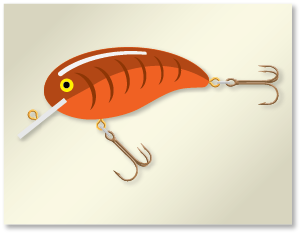
Designed to imitate bait fish or crayfish, crankbaits are cast and retrieved using different speeds and patterns. Crankbaits come in a variety of shapes and sizes with different size lips. The shape of the body determines the wiggle, and the size of the lip determines the depth, the crankbait will run. Crankbaits come in almost every color or design pattern imaginable. The best method of selection is to start with natural colors, then use what works for you.
Lipless Baits
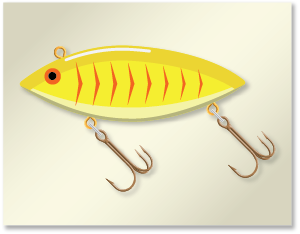
As the name suggests, lipless crankbaits lack the lip found on the front of the lure. The lure is flatter on the sides with a flat or round nose, and is available in different sizes, colors and patterns. The shape of the lipless crankbait imitates baitfish and makes it wobble intensely when retrieving. This lure is great for making long casts and will not float, which allows it to be fished at a variety of depths and speeds. When using this bait try different retrieve rates.
Poppers
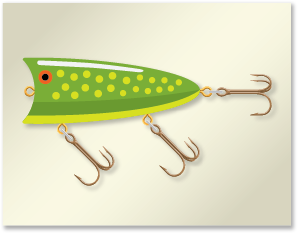
Poppers are topwater baits that produce popping sounds when retrieved. Poppers are good for catching fish that are feeding near or just below the surface. The popper is fished by casting then retrieving the lure with short or long sweeps of the rod. This creates a popping sound which attracts fish. Experiment with sizes and colors to see what works best.
Spinner Baits
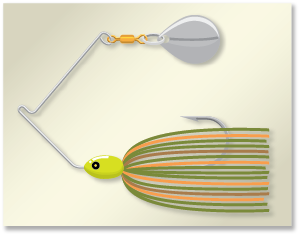
One of the most versatile lures, spinnerbaits can be fished fast or slow, and almost any time of the year. The weedless design allows the spinnerbait to be fished in thick brush or vegetation. Experiment with colors, blade sizes, and retrieves. On bright sunny days, the blades will reflect light imitating bait fish. A trailer hook can be added if fish are hitting the spinnerbait short (See Rigging).
Buzz Baits
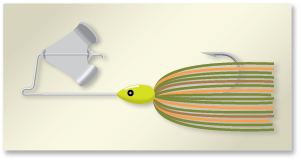
The buzz bait, like the spinnerbait in design, is a surface lure with a propeller that makes a squeaking noise when retrieved. It takes practice to keep the buzz bait on the surface. The noise will attract fish from cover and fish suspended below the surface. Ideal targets are weeds, stumps, trees, or cover submerged below the surface. A cast and retrieve technique are used, and a trailer hook can be used to cut down on short strikes (See Rigging).
Topwater
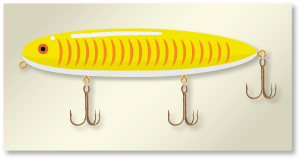
Topwater baits are used for attracting and catching fish that are feeding near or just below the surface. Make sweep and pause or zigzag motions with the rod to attract fish. Topwater baits come in a variety of sizes and colors. Experiment to see what works best and wait for the explosion on the surface.
Blade Baits
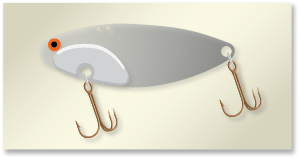
Blade baits are made of thin metal with weight at the front. The weight of the lure gets it down deep fast, while the shape adds action when retrieved. Use the blade bait to catch fish that are holding deep. After casting and letting the lure sink to the bottom, use the rod to lift the lure up a couple of feet, then let the lure flutter back to the bottom on slack line, reel in the slack and lift again. Fish usually strike when the lure is falling.
Large Crankbaits
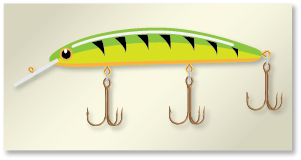
Crankbaits for Muskie or Northern Pike are larger versions of crankbaits used to catch other gamefish. The lures are usually longer with as many as three sets of treble hooks. Many colors and patterns are available including those that look like other gamefish including Bluegill and Bass. These large crankbaits can be cast and retrieved or trolled. When casting there may be times when Muskie or Northern Pike will follow the lure to the boat. If that happens, keep the lure in the water while making a figure eight motion to possibly get a strike. Be sure to use a steel leader when fishing for muskie. Do not try to lip land a Muskie or Northern Pike.
Plastic Worms
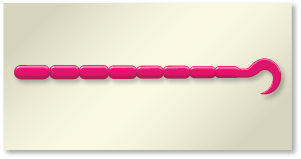
Though not a natural part of a fish’s diet, more fish are probably caught on plastic worms than any other bait. Available in a variety of colors, lengths, and styles, plastic worms are rigged Texas or Carolina style (See Rigging). The plastic worm is fished slowly by hopping, dragging or swimming. When hopping or swimming, fish will usually bite the plastic worm as it drops. Watch your line and feel for even the slightest twitch, then set the hook.
Plastic Lizards
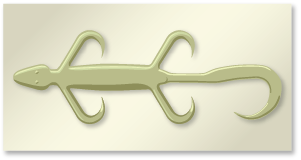
Another variation of the plastic worm, plastic lizards come in a variety of sizes, shapes and colors. Plastic lizards are rigged either Texas or Carolina style (See Rigging). Cast plastic lizards close to the bank then retrieve by hopping, dragging or swimming. Spring and early Summer are good times for this bait.
Salt Craws
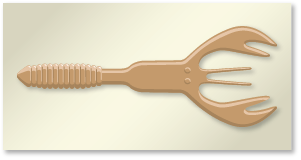
The salt craw is the crayfish variation of the plastic worm and infused with salty formula. The salt craw is rigged Texas or Carolina style (See Rigging), and fished by hopping, dragging or swimming. Think of how a crayfish moves and try to imitate the motion. This would include a slow retrieve with some quick jerks of the rod. Color selection is almost unlimited.
Grubs
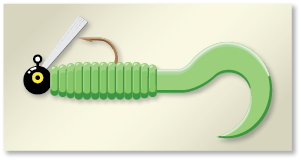
With a lead head and plastic body, the grub comes in many colors, shapes and sizes. Grubs can be used for small and large fish. The most popular bodies have a curly tail, with some having a spinning blade below the head. Fish the grub by swimming and occasionally stopping to let the grub sink before retrieving again. Watch for the strike as the grub sinks. To fish with very small grubs, an ultra-light fishing outfit is needed. The small grubs can be fished by casting and retrieving, fishing straight down, or suspended from a float. Movement from the waves will add action to a suspended grub, and the natural movement of your hand will do the same thing when fishing straight down.
Jig-N-Pig
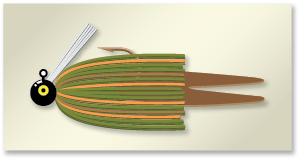
With a lead head, rubber or hair skirt, and a plastic or pork trailer, the jig-n-pig closely imitates the looks and movement of crawfish better than any other bait. The weight allows for better control and movement, and the exposed hook allows for a better hook set. Weed guards protruding from the head help to keep this bait weedless. The available colors for both the jig and pork are almost endless. A jig-n-pig can be fished shallow or deep and is a great bait for fishing tight cover such as logs and rocks.
Jigs
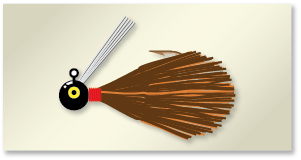
With a lead head, skirts made of hair or rubber and a variety of colors and sizes available, the jig is a simple lure. Fish the jig by casting and retrieving, altering the retrieve for the desired depth, and pump the rod slightly to add some action. When using small jigs for Trout and panfish, an ultralight spinning outfit or fly rod is needed to cast 1/16 ounce or smaller jigs. The jigs can be fished by letting them sink or suspended from a float. On windy days, suspended jigs will dance as the waves make the float move up and down.
Spoons
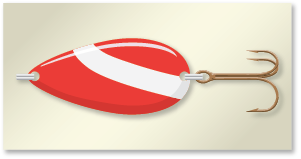
Nothing more than a slab of metal, the spoon has many variations. Spoons can be cast and retrieved, trolled or fished vertically in deep water. Spoons are good for vertical fishing during the winter months. When retrieved or trolled, the spoon imitates swimming bait fish. When jigged up and down, the spoon looks like an injured minnow. When fish are deep any time of the year, the spoon may be the only method left to catch fish.
Spinners
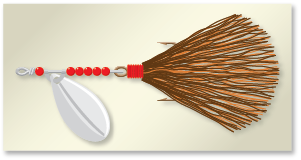
With a wire shaft with a spinning blade and treble hook, spinners are cast and retrieved. The action of the spinner imitates a bait fish and are available in a variety of sizes. Some spinners may have a bucktail skirt or a curly tail grub attached. Spinners can be used for small and large fish.
Nightcrawlers
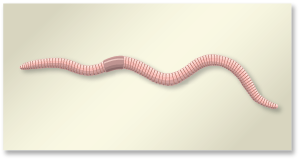
Probably the most popular live bait, almost anyone who fishes has used live worms. The most popular worms are wigglers and night crawlers. To fish with live worms, thread them on a hook and start fishing (See Rigging). Live worms are great when fishing with children. To help your worms last longer in the container, keep them cool while fishing. In between trips put them in the refrigerator, just don’t mistake them for leftovers.
Minnows
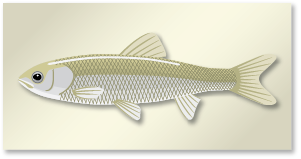
Minnows are a great live bait for most any type of fishing. Hook minnows through the upper back or lips, being careful not to kill them (See Rigging). Once in the water, the minnow will swim around attracting nearby fish. When fishing with minnows, in addition to catching fish you’re after, you will catch other fish as well. Be sure to use the proper rigging for the type of fishing you’re doing. Also, keep replacing the water in the bucket with fresh water, and keep the bucket out of the sun to help keep the minnows alive longer.
Crickets
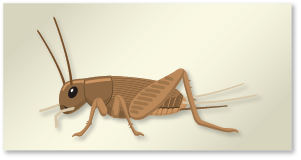
Crickets, those noisy little insects. are available almost all year around from bait and pet stores. Hook crickets through the mid-section and fish for Bluegill, Rock Bass and other panfish (See Rigging). Keep crickets cool and out of the sun and place a piece of potato or apple with them for moisture. If crickets aren’t available, grasshoppers will work as well. If the fish aren’t biting, just listen to the crickets sing.
Leeches
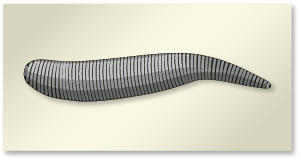
Similar to live worms, leaches are sometimes used when fish are holding up in deep water. Hook the leach just once, then cast. Leaches are tougher than worms and will last a bit longer.
Mealworms
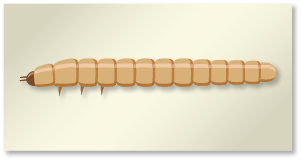
The larva form of the beetle, mealworms are a great bait for panfish and trout. With an exoskeleton, the mealworms are hardy and unlike worms, they will float. This will get mealworms off the bottom. Most bait and pet shops will carry live mealworms which are best for fishing bait, but dried worms will work also, which can be found in pet stores and farm stores.
Hook mealworms lengthwise to hide the hook (See Rigging). If you need a snack, mealworms can be eaten by people.
Fish Eggs

Salmon or power eggs are very popular when fishing for Trout. The eggs can be fished in any type of water but seem to work best in moving water or trolled behind a boat. The eggs can be used one at a time or clustered on a treble hook. If fished in moving water or trolled, a drift rig seems to work best, keeping the egg just off the bottom and above vegetation and debris (See Bell Sinker in Tackle).
Flies
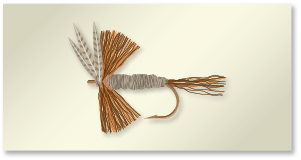
Flies, used mainly for Trout, but can be used to catch other fish as well, are small lures used to imitate an insect. Made from a small hook, hair, feathers, and thread, a fly rod is needed to cast small lures. The best method for selection is to ‘Match the Hatch’, in other words, look at what the fish are hitting at or below the surface, and match the fly to that insect. If the fish aren’t picky, try different fly patterns. Cast the fly to the desired location, wait a few seconds, then cast again giving the appearance of insects landing on the water.
Stink Baits
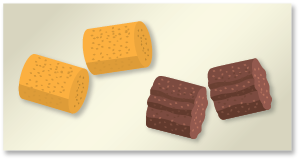
Yes, it holds true to its name, and it does stink. I don’t know what stinkbait is made of, but it does attract catfish and carp. There are many brands of stinkbait, and also the secret home recipes. Just put some stinkbait on the hook, and cast into your favorite catfish hole, then hang on.